Why Did SpaceX Stock Drop Today? Full Breakdown

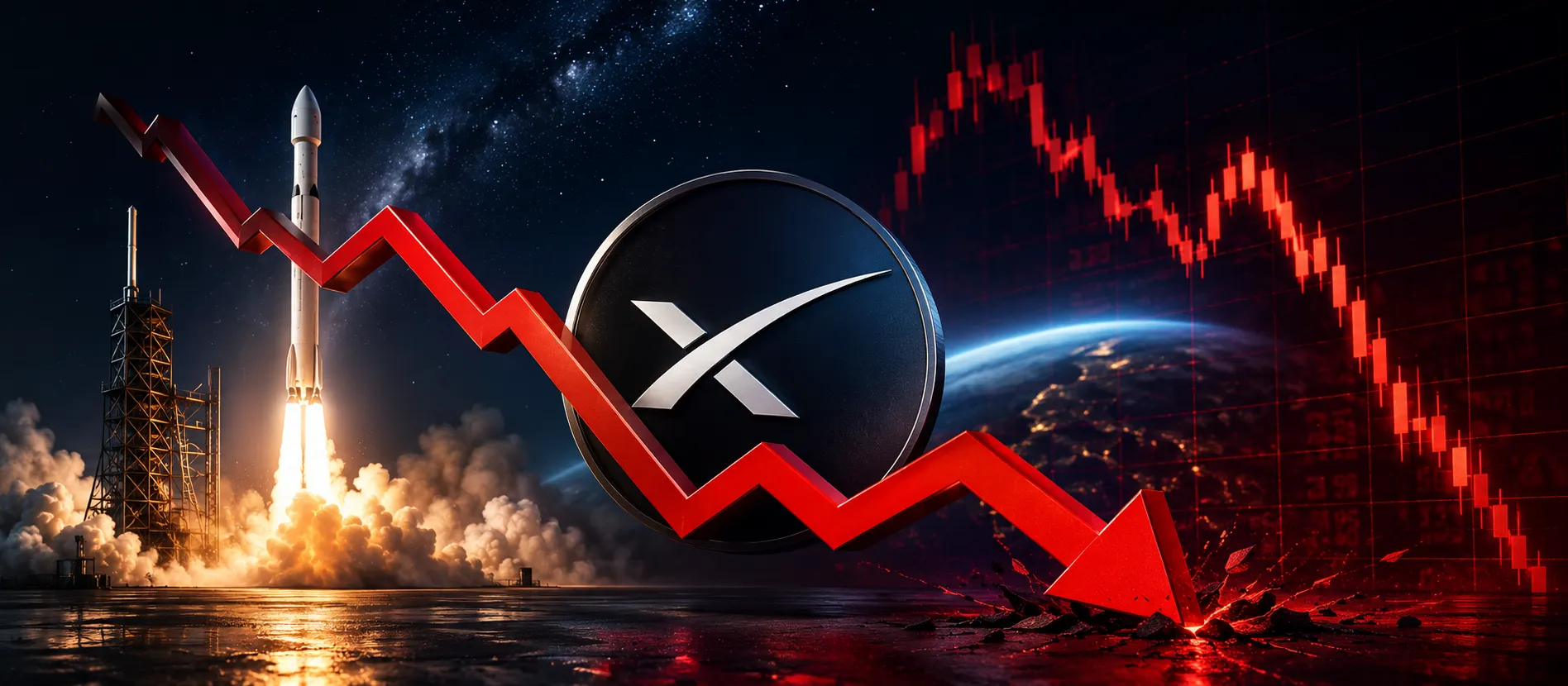
SpaceX investors got a reality check this week. After one of the wildest opening weeks Wall Street has seen from any new listing in years, the stock just logged its worst single session yet — down 16.4 percent on Monday. And the reasons go well beyond ordinary profit-taking.
A Week of Whiplash
Start with the basics. SpaceX priced its IPO at $135 a share on June 12, raising $75 billion in what's now the largest public offering ever. Shares opened around $150 and just kept going. Four days later, on June 16, the stock touched an intraday high near $225 — a 67 percent run that briefly made SpaceX more valuable than Amazon and, for a few hours, even Microsoft. Somewhere in that surge, Elon Musk became the world's first trillionaire.
Then gravity showed up. The stock slipped 5 percent Wednesday, another 3.6 percent Thursday, and after markets closed Friday for Juneteenth, it cratered 16.4 percent on Monday — easily its roughest day since trading began. String those three sessions together and SpaceX has shed almost a quarter of its value. By Monday's close, anyone holding since the IPO was sitting on a 14 percent gain, down hard from a peak north of 60 percent just days before. Tuesday's pre-market action wasn't any kinder, with shares drifting back toward $150.
So Why Is the Stock Actually Falling?
It's tempting to blame one headline, but this was really three or four things landing on top of each other in the space of a week.
The first was money moving the wrong way for existing shareholders. Barely had the confetti settled when SpaceX announced it was buying AI coding startup Cursor in an all-stock deal worth $60 billion — instant dilution for anyone who'd bought shares in the open market days earlier, before the company had filed even one earnings report as a public business.
Then came something almost nobody had priced in: SpaceX confirmed its first-ever bond sale, a senior unsecured notes offering reportedly around $20 billion, according to CNBC's reporting on the rally's reversal. That detail landed awkwardly. A company that had just raised $75 billion at IPO, then announced a $60 billion acquisition, was now also going out to borrow billions more.
There was a structural piece too. June 17 marked the first day options started trading on the stock, finally giving short sellers a clean way to bet against a name that had, until then, traded more on hype than on fundamentals.
And then the valuation crowd weighed in. SpaceX's own filing pitched a total addressable market of $28.5 trillion, with $26 trillion tied to its AI ambitions. NYU's Aswath Damodaran valued SpaceX's equity closer to $1.3 trillion — roughly 28 percent below where the rally had carried it — and didn't mince words about how aggressive that market-size number looked, a point picked up in IndMoney's breakdown of the selloff.
The Money Problem Underneath It All
Strip away the headlines and there's a real financial story here too. SpaceX folded Musk's AI venture, xAI, into the company back in February, and that division is now its single biggest drag. SpaceX posted a $4.9 billion net loss for all of 2025 — a sharp reversal from a profitable 2024 — then added another $4.28 billion loss in just the first quarter of this year. Starlink, on its own, is doing fine — about $4.4 billion in operating profit last year — but the AI side is burning through that faster than Starlink can replace it.
To be fair to the bulls, SpaceX isn't scraping for cash. The company disclosed roughly $100.8 billion in cash and equivalents as of June 19. Seen that way, the bond sale looks less like trouble and more like a business taking advantage of cheap financing while it can.
The Float Story Nobody's Talking About
Here's the part most coverage skipped entirely: only about 4 percent of SpaceX's total shares are actually free to trade right now. The other 96 percent stay locked up until December. That razor-thin float is exactly why the stock could rocket from $135 to over $225 in a matter of days — and it's just as much the reason it can unwind that fast on the way down, a dynamic Yahoo Finance's reporting flagged as a real risk.
Lockup Unlock Schedule
- A 20% insider unlock tied to SpaceX's first earnings report — expected early-to-mid August 2026
- A 10% unlock that kicks in if shares trade 30% above the IPO price of $135
- Full December 2026 lockup expiry — the biggest wave of potential selling pressure
There's a counterweight coming, at least in theory. SpaceX is on track to join the Nasdaq 100 around July 6, which usually forces index funds to buy in regardless of opinion. How much buying that generates is genuinely disputed — some estimates run as high as $8–10 billion, while more careful modeling puts the realistic effect closer to 2 percent. S&P 500 inclusion is a longer wait, since that requires four straight quarters of GAAP profit, and nobody's expecting that before late 2027.
What It Actually Means If You're Holding
If you got in at the IPO price, you're still ahead — just by a lot less than a week ago. If you bought anywhere near that $225 peak, this drop has probably wiped out most or all of your paper gains. Neither outcome tells you what SpaceX is worth five years from now. What this week actually proves is simpler: a stock with this little float, this much fresh capital news landing at once, and an AI division still finding its footing was never going to trade quietly in its first month on the public market — and it hasn't.
❓ Frequently Asked Questions
Why did SpaceX stock drop today?
A $60 billion acquisition that diluted shareholders, a surprise $20 billion bond offering, the start of options trading that let short sellers in, and growing pushback on the stock's valuation all hit in the same week.
Is SpaceX stock a good buy after the IPO drop?
Bulls point to SpaceX's $100.8 billion cash pile and Starlink's real profitability. Bears point to xAI losses, aggressive valuation assumptions, and lockup overhang. The stock has only been public a couple of weeks.
When does SpaceX stock's lockup period expire?
Most stays locked until December 2026. Earlier unlocks: 20% insider unlock at first earnings report (early-mid August), and 10% unlock if shares trade 30% above the $135 IPO price.
Will SpaceX join the Nasdaq 100 or S&P 500?
Nasdaq 100 inclusion expected around July 6, 2026. S&P 500 requires four consecutive GAAP-profitable quarters — not expected before late 2027.
Is SpaceX stock overvalued?
NYU's Damodaran put fair value near $1.3 trillion, well below post-IPO levels, citing aggressive AI market-size assumptions. Many bulls disagree and bet on Musk's execution across Starlink and AI.
Disclaimer: This article is for informational purposes only and is not financial advice. Stock prices can move sharply in either direction. Do your own research, or consult a licensed advisor, before making investment decisions.


Discussions (0)
No comments yet. Be the first to share your thoughts!